What Theo wrote
Five-word prompt. No code reference, no parameter, no syntax. Inkie’s job was to translate.

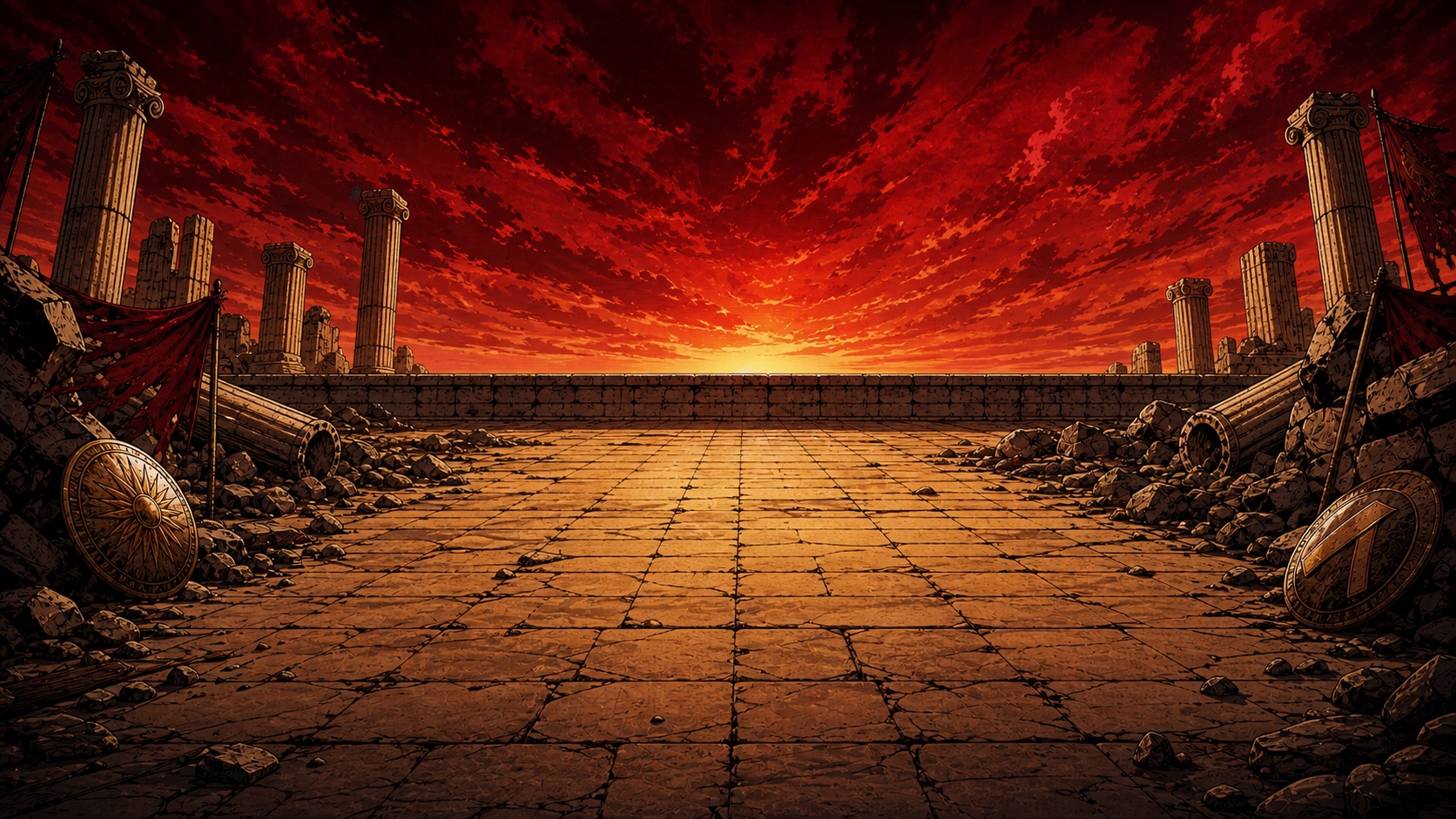
Theo’s first Tell and Show game. Side-scrolling battlefield. Wave after wave of archers. The first project where he learned that "make it scary" had a craft answer.
Five words. The first time Theo asked the AI for a feel, not a fact. Inkie came back with three options, and the one Theo kept was not the one he expected.
Five-word prompt. No code reference, no parameter, no syntax. Inkie’s job was to translate.

Three concrete craft moves. The kid picks one.
Changed
Theo played it. Twice. Then turned to ask why the sound was annoying.
Three changes from one prompt, all snapshotted, all reversible.
Every Tell and Show Game project ships with the same wizard set. Theo used these four on Achilles — the same four your kid will reach for first.
The archers, the central threat. Inkie scaffolded the spawn pattern; Theo tuned the wave rhythm so each arrow had its own moment.
Hit-box tuning. Theo wanted misses to feel fair and hits to feel earned. He revised the dodge window twice before the rhythm worked.
The "scary arrows" decision. Camera shake on near-miss + a red flash. The change Theo kept from Inkies three options.
The hand-drawn manga ink look. Theo picked the swap from a default set; Inkie proposed three takes and he kept the heaviest one.
Achilles taught him to specify the feel. Icarus taught him to revise the threshold. Orion taught him to split a vague request into three concrete asks. Perseus taught him to keep the second proposal.
Fly between sea and sun.
Read Icarus →
Three-phase boss fight.
Read Orion →
Chamber crawl. Mirror puzzle.
Read Perseus →Achilles took Theo four sessions to ship. The decisions in those four sessions are what changed him from a kid playing games into a kid making them.
